Summer Tree Care in Southern Wisconsin
Summer is Here!
In Wisconsin, many of us spend countless winter months looking forward to warm summer days when much of our state’s natural and social environments come to life. As we move away from wetter and cooler days into the full swing of summer, we are not the only ones celebrating; trees are joining us with rising activity levels. But what exactly does that mean? As a homeowner, what can you do to help ensure your trees have all the tools they need to grow efficiently, healthily, and in a manner which does not endanger you or your property?
Biology Basics
One of the quintessential hallmarks of Wisconsin summers is long days. While it may seem obvious, longer days mean more sunlight is reaching tree canopies. Additionally, summer sunlight is more direct and energy-rich than winter rays. To our trees, these factors are exactly what they’ve been waiting for. Starting in late spring and generally lasting through mid-summer, trees are in their most active time of year. For trees, activity means everything from higher rates of photosynthesis and energy production, to overall growth as a result, both in height and overall size.
Too Much of a Good Thing?
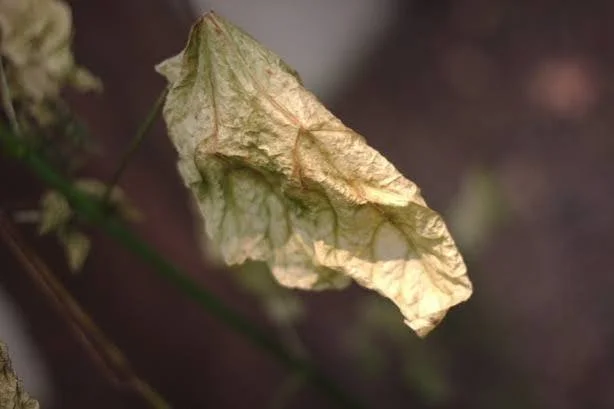
Leaves yellowing and/or wilting can be a telltale sign of heat related stress.
While sunlight and warmth are beneficial factors for tree growth and activity, they can be harmful in excessive quantities. As temperatures rise and stay warmer for longer, trees are more prone to moisture stress. Essentially, this is an imbalance in water, with the tree losing water more quickly than it can replenish. Once a tree is stressed, it also opens the door for other factors to negatively impact health and vigor, such as pests or a reduction in nutrient uptake from soil. Obviously, not all of summer is scorching heat. During weeks with your average, enjoyable summer temperatures, practicing good tree care is still important; a tree starting from a healthier baseline will be better positioned to withstand the hotter-than-average weeks that will inevitably come our way. For more details specific to summer heat stress and individual species, check out this article, written by an ISA-Certified, Tree House arborist.
What Can You Do?
While we obviously cannot control the weather, there are a few easy steps for tree owners to give your trees the best chance to thrive in the summer. One, while maybe not in your control, is to plant native! Tree species that are historically native to Dane County will generally be the ones best positioned to deal with our climate and precipitation patterns with minimal outside input. If you are looking to install a new planting, choosing the right tree from the outset is perhaps the most important decision you can make to ensure the best chance of a healthy, mature tree. However, most tree owners are not dealing with new plantings. Rather, most wonder how best to take care of what they inherit on their landscape.
Watering
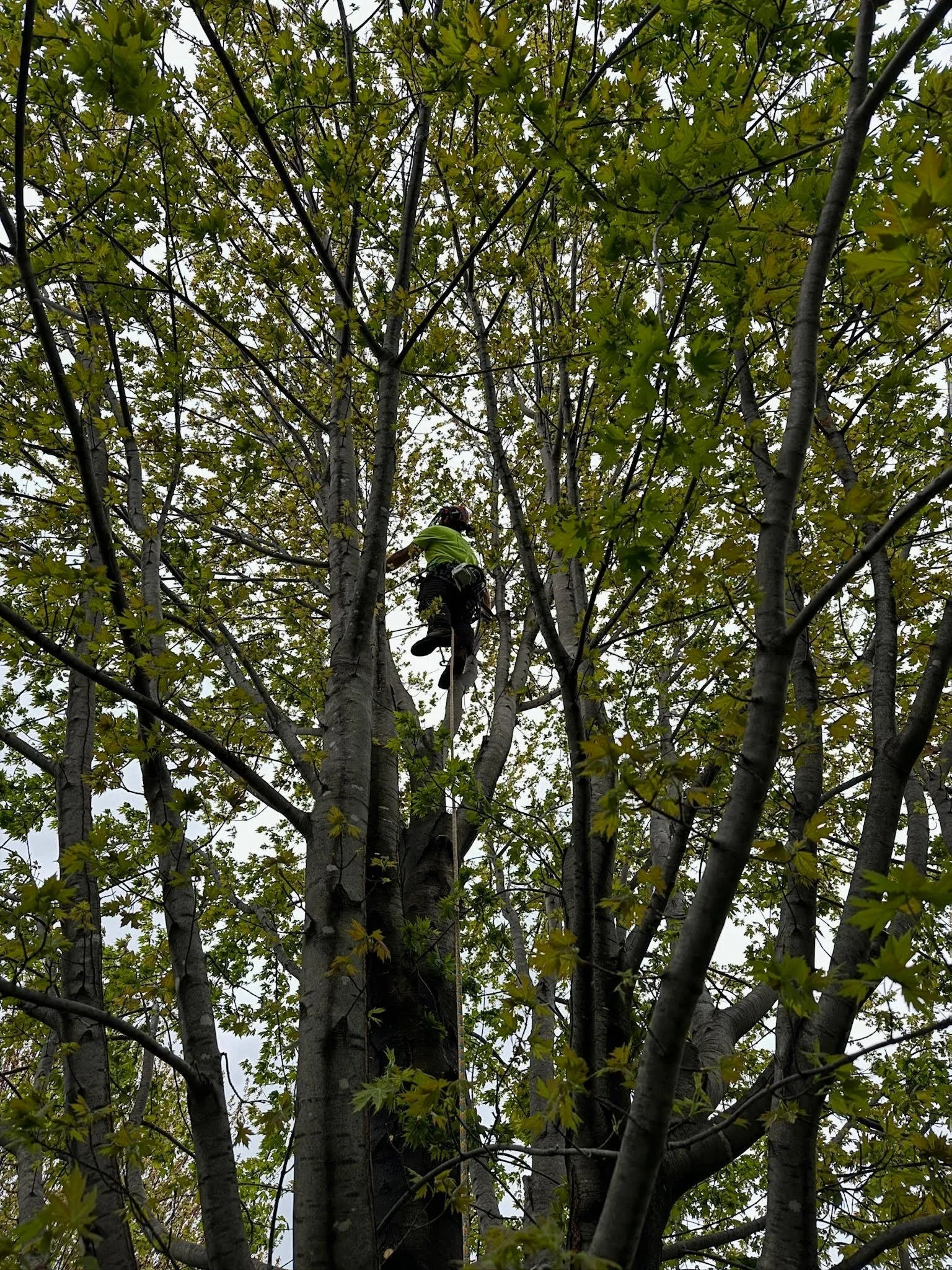
One of our many ISA-Certified Arborists providing a regular pruning service.
One of the most important steps to take in aiding trees during the summer is to water smartly. In normal conditions, mature and healthy trees benefit from a soak (1-1.5”) about once per week, while younger and newly established plants have differing needs. New plantings need daily waterings for the first 1-2 weeks, then every 2-3 days for ten weeks following. After this, watering frequency can generally drop to once per week. When watering trees, water in the morning before temperatures rise to reduce evapotranspirative loss, and focus water into the soil around the tree, where fine subsurface roots can absorb with maximum efficiency. Additionally, it helps to leave your hose or sprinkler on a low volume trickle, reducing runoff and ensuring more of your water percolates through the soil layers.
Mulch
Aside from water, mulching is perhaps one of the biggest bang-for-your-buck steps tree owners can take to help their trees thrive. Aside from keeping weeds down, mulch helps keep soil and roots cool, and can help reduce potential detrimental soil compaction. Furthermore, mulch can eventually improve soil quality. Organic mulch will break down over time, adding organic matter to soil, and providing a home for essential microbial life. When laying down mulch, aim for about 2-4” thick, and be sure to avoid piling mulch against the trunk. Instead, aim for a donut shape to ensure your tree won’t become girdled or begin to rot.
When Should You Contact Us?
Aside from proper mulching and watering practices, you as a tree owner should avoid doing much other work on your trees. While it can be tempting to just take off one branch that has been on your mind, improper pruning techniques can be extremely damaging to overall tree health, and lead to other potential health ramifications. Our team of ISA-Certified Arborists can help with more advanced summer care techniques, such as comprehensive pruning, cabling, or plant health care (PHC) treatments if need be. We can also help you identify potentially vulnerable trees, trees already impacted by stressors, or even help you to set up a prescription of care you can continue to manage on your own! No concern is too big or too small, so please reach out however is most convenient to you, and we can continue to keep as many of Madison’s trees standing as possible.