
Looking around Madison and Dane County, it is officially fall. Most deciduous trees have surrendered their leaves for the season, and are beginning to slow internal functions to prepare for the winter season ahead. While we may be dreading the oncoming cold weather though, this transition presents an opportunity for tree owners and arborists alike! If you have ever contacted us and been forced to wait until colder months, have work planned, or are just curious about the changes ahead for your trees, read on to learn more about tree dormancy, and why late fall is often the best time to work on your trees.
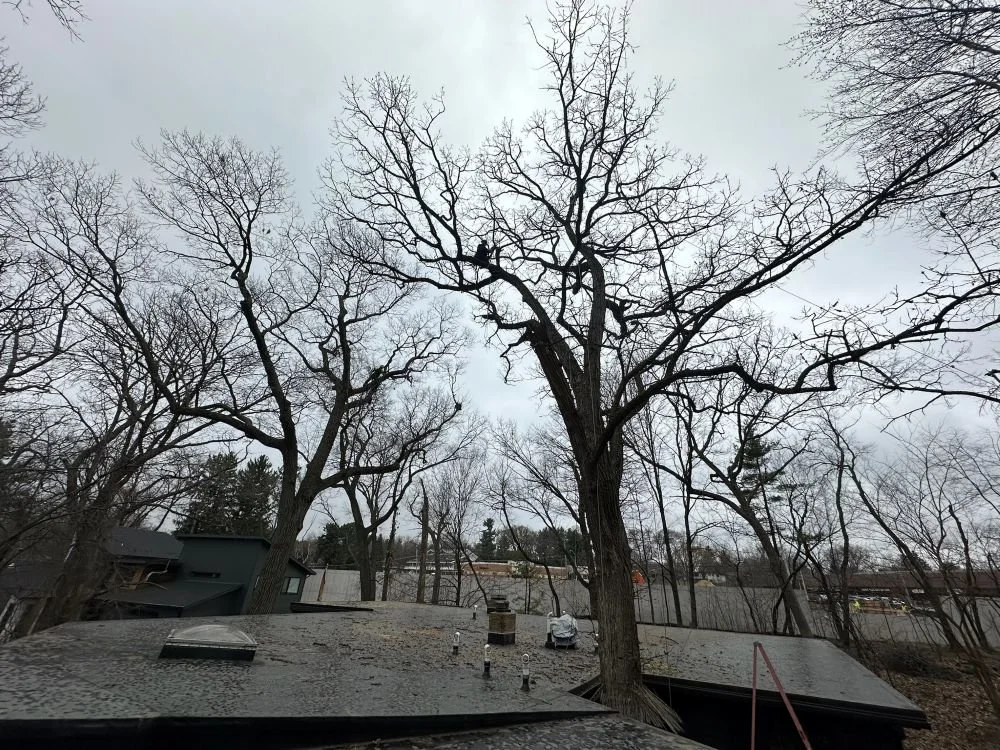
Work never stops! Dormant season is often a great time to prune, even if it's sometimes chilly for our arborists!
Madison Winters, and The Science of Dormancy
You have likely heard the term “dormant” before. But when it comes to trees, what does that actually mean? What changes are happening beneath the bark to get through our harsh Wisconsin winters? To start, it's important to understand phenology. Phenology is a study of the relationship between seasonality and life cycle events in plants and animals. As total sunlight declines due to shorter day length and a broader angle due to Earth’s tilt on its axis, plants and trees respond.
Much of a tree’s internal functions and processes are driven by hormones and hormonal responses. When weather begins to change, these hormones are essentially telling trees to slow down. By slowing internal processes, trees are able to maximize their energy retention and nutrients for the season ahead. Losing their leaves is another part of this, though leaf drop is more focused on water retention than anything else. The end result is a tree that appears inactive through winter. The truth is that some slow root growth may be occurring underground, and some internal cycling is still occurring, just at a significantly reduced rate. Consequently, dormancy is not to be confused with mortality, and is more akin to animal hibernation than a true shutdown.
Dormancy as a Maintenance Opportunity
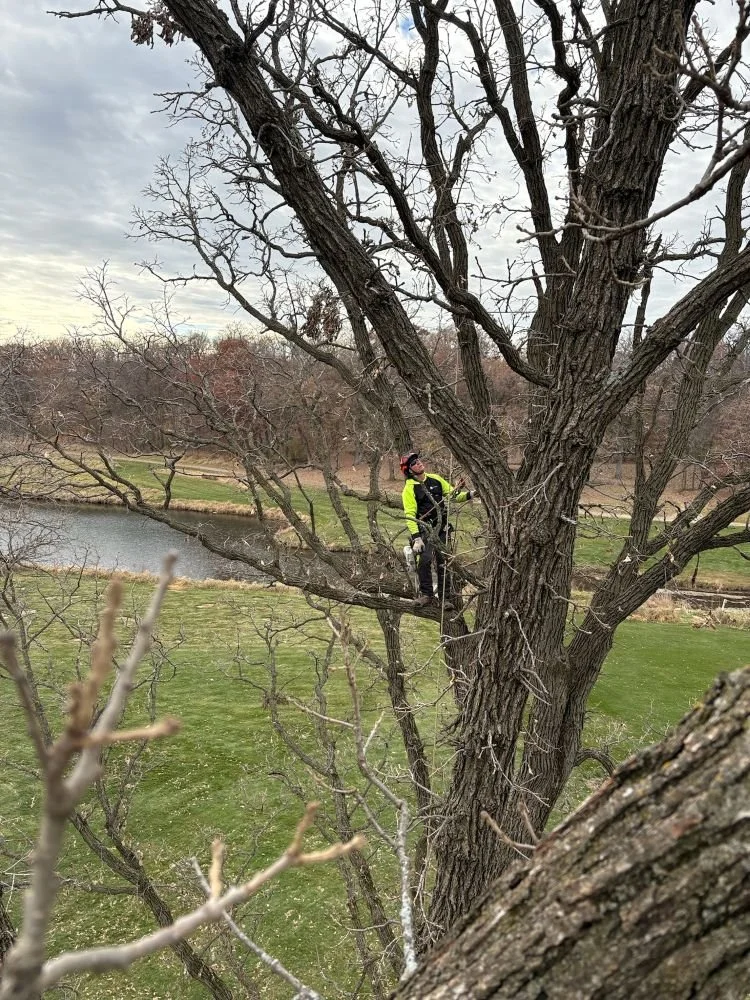
Joe House pruning in a dormant oak canopy
Just because your trees are shutting themselves down for the winter doesn’t mean they can be ignored. Rather, our colder months and a tree’s dormant season is often the best time to have work done on your trees. One of the most significant reasons why is disease transmission. Pests and insects, which are often vectors for or play a key role in tree disease spread, are significantly less active in cold weather. Avoiding the higher activity levels is an easy way to lower risk of disease spread. Oak trees are prime examples of a species that should only be pruned in colder months, and in many areas (Madison included), this pruning timing is legally mandated.
Though stopping disease spread is one of the biggest benefits to pruning during dormancy, many others exist. With leaves off of your trees, it is often easier to see and identify limbs for removal or weight-reducing cuts. Having a sound pruning plan is crucial, especially during months where trees need to cope with snow and ice weight. Additionally, trees can have an easier time compartmentalizing and responding to a cut made when not in an active growing season. Lastly, we as arborists appreciate working on frozen ground! While we are always taking as many steps as possible to preserve our work sites, frozen ground means less risks for divots in grass, disruption to garden beds, and soil compaction.
If you have questions or concerns about your trees, please reach out and set up a consultation with one of our many ISA certified arborists! Like you, we want to do all that we can to ensure your trees are healthy, properly taken care of, and set up for a good winter!