Know Your Oaks
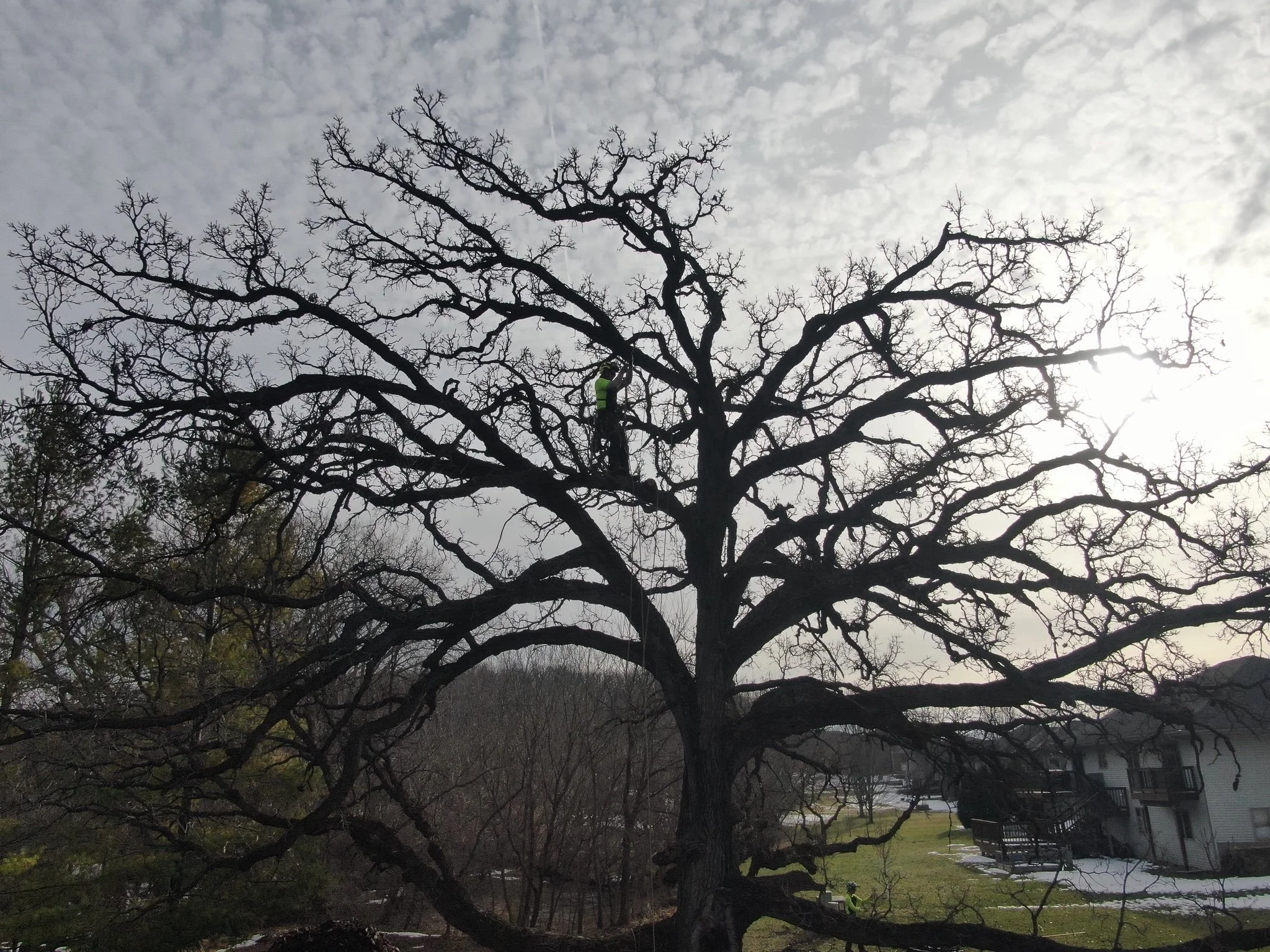
One of our arborists enjoying a statement bur oak climb.
Chances are, you are familiar with the oaks that dot your neighborhood and cover large swaths of Madison and Dane County’s urban forests. A charismatic species in southern Wisconsin, oaks are an appealing tree to maintain on your or the public landscape for a variety of reasons that range from ecology to aesthetics. Read on to learn more about your native Wisconsin ecology!
Red Oak or Black Oak?
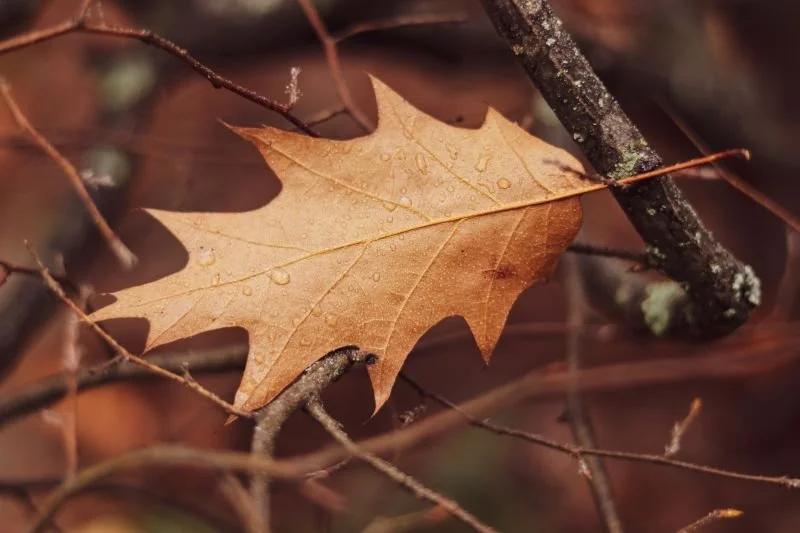
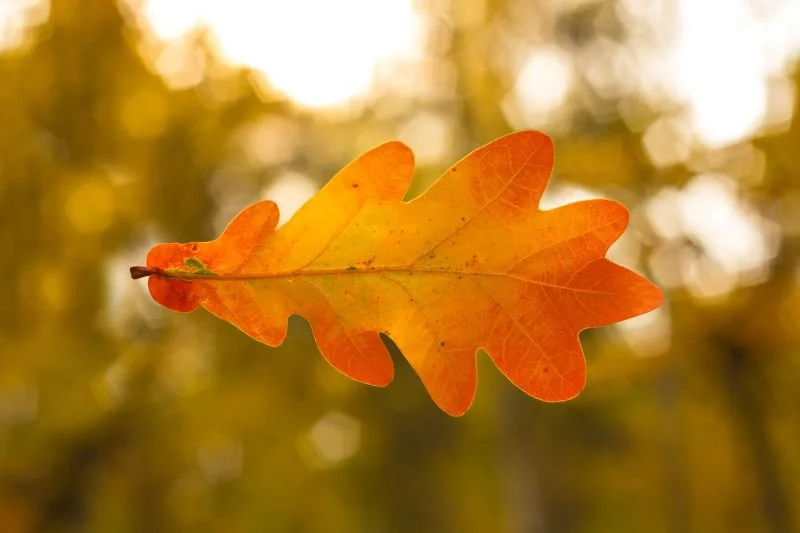
Wisconsin is home to nine native species of oak, but to make a jargon-y discussion simpler, we can broadly categorize oaks into one of two sub groups: red oaks and white oaks. The red oak family can be distinguished by the pointiness of their leaves, and includes species such as the red oak and the black oak. Conversely, the white oak group is identifiable by more rounded leaves, seen on species like the white oak and the bur oak. While leaf appearance is the most easily distinguishable feature, there exist more nuanced differences: the colors each may exhibit in the fall, habitat preferences, bark and wood properties, and growth rates. If you want to learn more about some of these key differences, you can visit the University of Wisconsin-Extension’s website, where their forestry programming has many great references and informative pages, or reach out to us! We’re always happy to talk trees!
Threats to Dane County Oaks
Unfortunately, oak populations across the state are in steep decline. Though there are many factors, nearly all of which are possible in some way, there exist a few obvious culprits. One overarching concern is a changing climate. Wisconsin is seeing increased drought periods, and Dane County itself, if not always meeting the threshold of a drought, is seeing a trend of increasing dryness. This is creating a baseline of stress for oaks and many other tree species. Another threat is the Spongy Moth (previously known as Gypsy Moth). Peaking in the early 2020s, the Spongy Moth population may not be as large as previously, but they are still a factor in explaining the declining oak population. Doing their damage by defoliating trees (eating away the leaves), oaks are a preferred food source, and on trees already experiencing drought stress, that damage caused by feeding can be catastrophic.
Oak Wilt
Though Spongy Moths and climate change are certainly parts of the puzzle of oak decline in Wisconsin, one of the most prominent forestry issues, and the main current concern, is oak wilt. Oak wilt is a disease, caused by a fungus, that works by infecting a tree’s inner transport systems, and eventually forming fungal mats underneath bark, which in turn attracts beetles that feed on and harm that same transport system. Critically, once oak wilt is in an area, it quickly becomes pervasive, spreading through root systems to neighboring oaks, as well as being spread by the beetles. These beetles can carry the fungus, and when they feed on other trees, can spread the fungus easily. It is also crucial to understand that beetles look for the easiest entry point in a tree. This means finding cuts, breaks, tears, or otherwise accessible entry points (wood lacking protective bark). Once infected, the easiest sign to watch for is the premature wilting and dropping of leaves in summer seasons, usually starting from high in the canopy and progressing lower as more leaves drop.
What Can Be Done?
Focusing on oak wilt, the biggest step in combatting the fungus is prevention. As mentioned, once in an area or stand of oaks, oak wilt spreads rapidly. Keeping it out of the area in the first place has thus been a focus. Though there have been some successes in disrupting root networks to prevent underground spread, this is a costly method, and potentially harmful to trees if the required digging and excavation isn’t done properly. Instead, the most common form of prevention takes the form of harvesting or cutting moratoriums (temporary legal ban). The fungus responsible for oak wilt is most active, and beetles are most abundant, in spring or early-mid summer. So many state municipalities have put bans in place on any kind of cutting (with some potential exceptions for hazardous trees) during this window. The City of Madison has banned any work on oak trees between April 1 and October 15, the only exception being in cases of emergency, and only after consulting with a certified arborist.
We take the preservation of Dane County and Madison’s urban forest very seriously, and always abide by these restrictions. While we never like telling our neighbors and customers that we can’t service them until fall, this is done with science in mind, and we hope you can understand. If you have an oak tree on your property and want to learn more about how to keep a Madison mainstay standing, please reach out. We would love to help you help Madison’s forest!